You built the store. You picked the products. You ran the ads. And then a customer clicked “buy” — and that’s exactly where most ecommerce businesses quietly start falling apart.
Shipping and fulfillment are the unglamorous engine room of every online store, but they’re also where customer loyalty is won or lost. A late delivery, a confusing tracking page, or a surprise shipping charge at checkout can wipe out months of marketing effort in a single transaction. On the flip side, a smooth, fast, affordable fulfillment experience can turn a first-time buyer into a repeat customer — and a repeat customer into a brand advocate.
Whether you’re just starting out or trying to clean up an operation that’s outgrown its processes, this guide gives you everything you need to choose, build, and optimize a fulfillment strategy that actually scales.
Most shoppers decide whether to complete a purchase based on two things: price and speed. According to industry data, cart abandonment rates spike dramatically the moment unexpected shipping costs appear at checkout. Free shipping, or at the very least transparent and fast shipping, isn’t a bonus anymore — it’s an expectation baked into how consumers shop online.
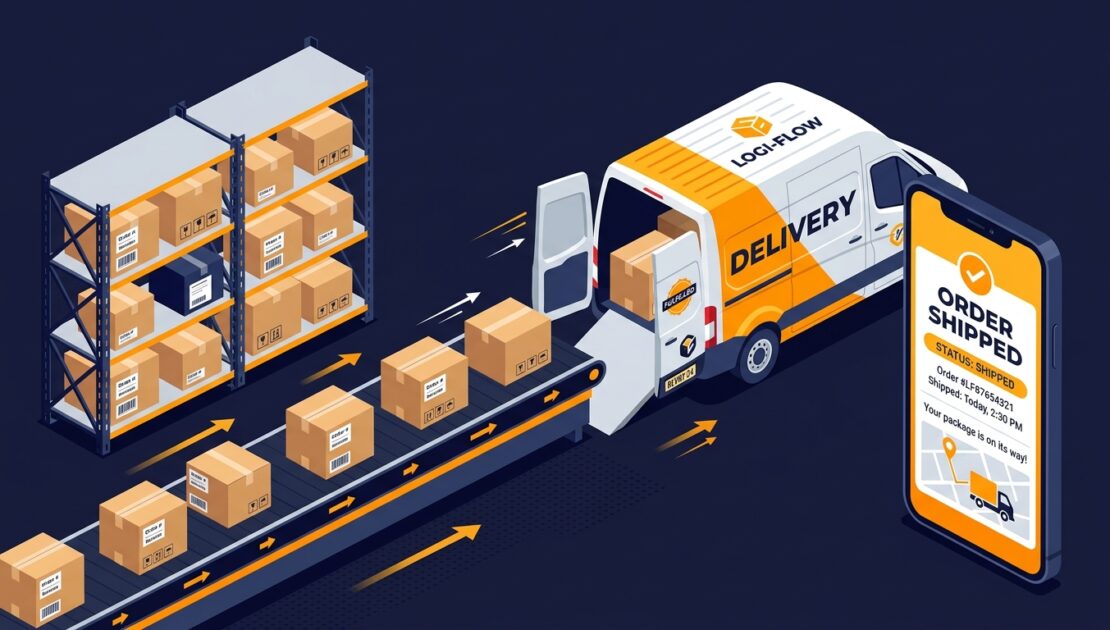
But fulfillment goes beyond just getting a box from point A to point B. It encompasses everything that happens after a customer clicks “buy”: picking and packing inventory, choosing a carrier, printing labels, managing returns, and communicating with the buyer every step of the way. Get any part of that chain wrong, and it costs you — in refunds, negative reviews, and lost future sales.
The good news? You don’t have to figure it all out alone, and you don’t have to build a warehouse empire to compete. There are multiple fulfillment models available today, and the right one depends on your product type, sales volume, and growth stage.
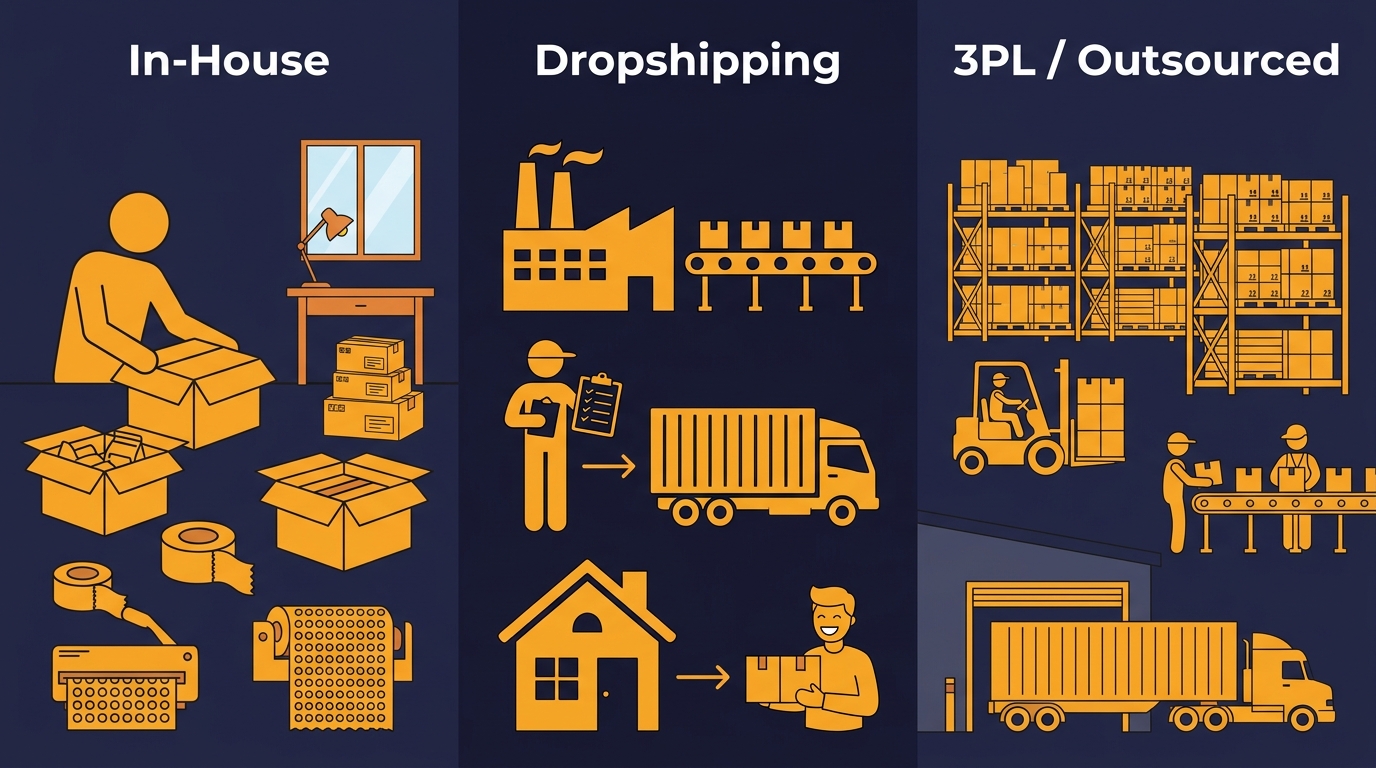
Before you can choose the right shipping strategy, you need to understand the three main fulfillment models — and what each one really means for your day-to-day operations.
In-House Fulfillment means you handle everything yourself: storing inventory, picking and packing orders, printing shipping labels, and dropping packages off with a carrier. This model works well when you’re starting out with low order volumes and want full control over the customer experience. It’s cost-effective early on, but it doesn’t scale easily. Once you’re shipping dozens — or hundreds — of orders per day, in-house fulfillment becomes a full-time job that pulls you away from growing the business.
Dropshipping removes the inventory burden entirely. You list products in your store, and when a sale is made, a third-party supplier ships directly to the customer on your behalf. Your margins are thinner, and you have limited control over packaging and delivery times, but the upfront investment is minimal. This model is ideal for testing new product categories or running a lean, low-risk operation.
Third-Party Logistics (3PL) is the middle ground that most scaling ecommerce businesses eventually move toward. You send your inventory to a 3PL warehouse, and they handle storage, packing, shipping, and often returns. Companies like ShipBob, ShipMonk, and Amazon FBA (Fulfilled by Amazon) are popular 3PL options. You pay for the service, but you buy back time and scalability — which is often the better investment.
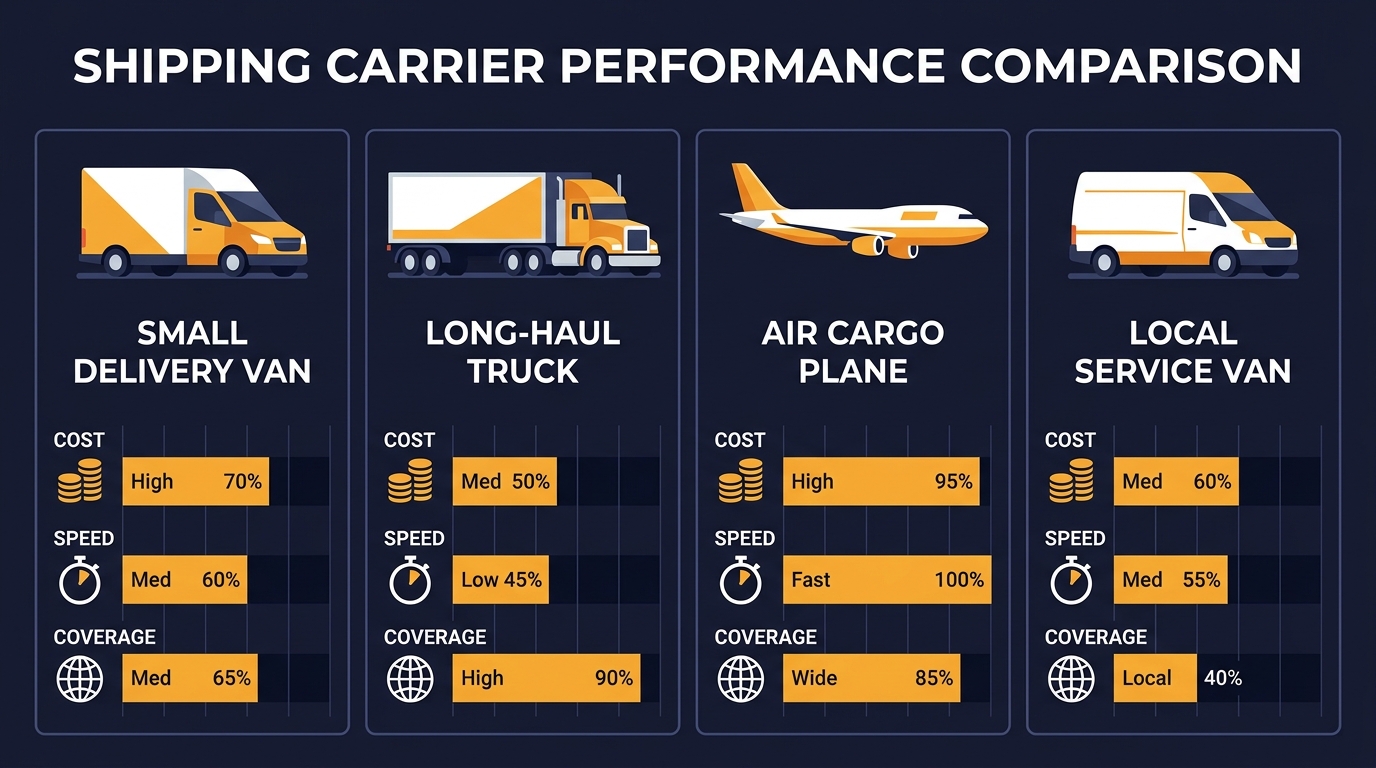
Once you’ve settled on a fulfillment model, the next decision is which carriers to use. Carrier selection directly affects both your shipping costs and your customer’s delivery experience.
The major domestic carriers in the United States each have strengths worth knowing. USPS is often the most affordable option for lightweight packages, especially for last-mile delivery in rural areas. UPS and FedEx offer more robust tracking, faster delivery windows, and better handling for heavier or high-value packages. Regional carriers like OnTrac or LSO can sometimes undercut national rates for specific geographic zones.
Rather than locking into one carrier, most experienced ecommerce operators use a multi-carrier strategy — routing each order to the best carrier based on weight, destination, and speed requirements. Shipping software platforms like EasyPost, ShipStation, or Shippo make this comparison automatic and can dramatically reduce your per-label cost over time.
How you price shipping at checkout is one of the most consequential decisions in your ecommerce business. There are three main approaches, each with its own trade-offs.
Free Shipping is the gold standard of customer experience — but nothing is actually free. You’re either absorbing the cost into your margins, raising your product prices to cover it, or setting a minimum order threshold that triggers it. A minimum order free shipping strategy (e.g., “Free shipping on orders over $50”) is one of the most effective tactics for increasing average order value while keeping shipping costs manageable.
Flat-Rate Shipping charges every customer the same fee regardless of order weight or destination. It’s simple, predictable, and easy to communicate. The risk is that you’ll lose money on heavy orders and leave money on the table on light ones — so it works best when your product catalog is relatively uniform.
Real-Time Carrier Rates display the actual calculated cost at checkout based on the customer’s location and package weight. It’s the most transparent option and can save customers money on smaller orders, but it can also surprise shoppers with higher-than-expected costs — contributing to cart abandonment.
Many stores use a hybrid approach: free shipping above a threshold, flat-rate below it, and real-time rates as an expedited option.
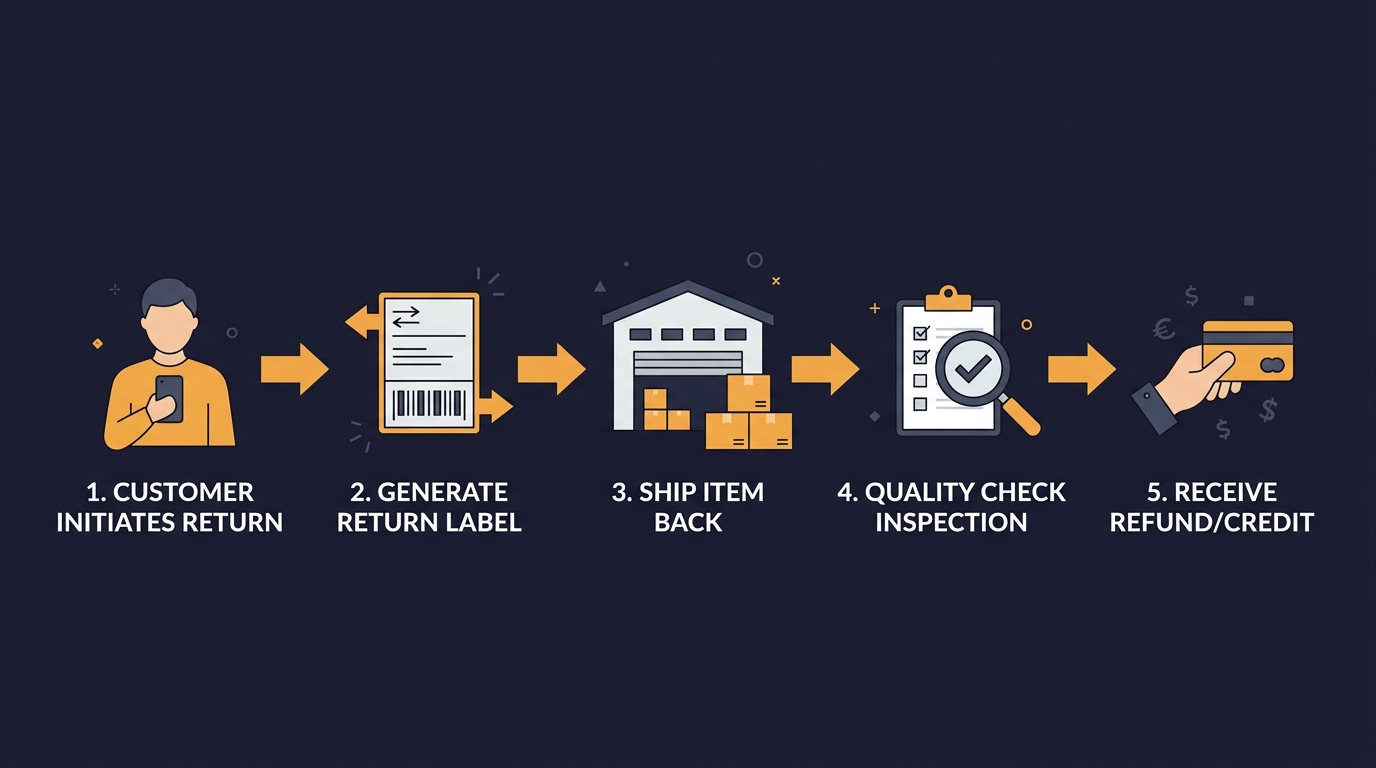
Returns are inevitable — especially in categories like apparel, electronics, and home goods. What separates successful ecommerce brands from struggling ones is how they’ve designed the returns experience.
A complicated, expensive, or slow return process is one of the top reasons customers don’t buy again. A simple, frictionless return policy — with a prepaid label and clear instructions — builds trust before the purchase even happens. Consider that a large percentage of shoppers read return policies before buying, and many will abandon a cart if the return process seems difficult.
Practically speaking, you have a few options. You can handle returns in-house by designating a returns address and processing refunds manually. You can use your 3PL partner to manage returns and restock sellable inventory. Or you can use a dedicated returns platform like Loop Returns or ReturnBear, which automate the process, offer branded return portals, and give you actionable data on return reasons.
Whatever system you choose, track your return rate by product — it’s one of the most telling signals about product quality, sizing accuracy, or misleading listings.
The right software stack can be the difference between a fulfillment operation that runs smoothly and one that’s constantly putting out fires. Here are the core categories of tools worth investing in.
Order Management Systems (OMS) centralize every order from every sales channel — Shopify, WooCommerce, Amazon, Etsy — into one dashboard. This prevents the nightmare of double-selling or losing track of an order that came in from a marketplace at midnight.
Inventory Management Software tracks stock levels in real time, alerts you when items are running low, and helps you forecast demand so you’re not caught out of stock during a campaign or holiday season. Tools like Linnworks, Brightpearl, and TradeGecko (now QuickBooks Commerce) are popular options.
Shipping Software like ShipStation or Shippo connects to your store and your carriers, compares rates automatically, prints labels in bulk, and sends tracking notifications to customers. This alone can save hours every week.
Warehouse Management Systems (WMS) become relevant once you’re operating your own warehouse or working with a 3PL that allows integration. They optimize pick paths, manage zones, and reduce packing errors.
You don’t need all of these on day one. Start with the tools that solve your biggest current pain point and add layers as you scale.
Most ecommerce owners underestimate what shipping actually costs. The sticker price on a shipping label is just the beginning. Here’s a complete breakdown of what contributes to your true shipping cost per order.
The carrier rate is the base. On top of that, factor in packaging materials (boxes, poly mailers, void fill, tape, tissue paper), labor time for picking and packing, any software subscription fees divided by your monthly order volume, return processing costs allocated per order, and the cost of damaged or lost shipments. When you add it all up, your actual cost per fulfilled order is often 20–40% higher than the label alone.
Understanding this number is critical because it determines how you price your products, set your free shipping threshold, and negotiate with carriers. Volume discounts are available through most major carriers once you cross a certain monthly shipment count — and 3PL partners negotiate these rates at scale, which is one of the most underappreciated benefits of outsourcing fulfillment.
Going global opens up enormous markets, but international fulfillment comes with real complexity. Duties, customs declarations, shipping delays, and restricted items vary by destination country — and getting any of it wrong can result in packages stuck at customs, unhappy customers, and regulatory headaches.
Start by identifying which countries you’re actually getting organic demand from. If you see a meaningful number of international orders coming in, it’s worth building a proper international strategy. If you’re just experimenting, you can start by offering international shipping through USPS First Class International or services like DHL eCommerce, which offer relatively affordable rates for lighter packages.
For brands seriously targeting international markets, consider using a distributed fulfillment model — partnering with a 3PL that has warehouse locations in your key markets. This dramatically reduces transit times and can eliminate many customs complications by shipping from within the destination country or region.
Always display total landed cost (product price + shipping + estimated duties) transparently at checkout when shipping internationally. Hidden customs charges on delivery are one of the most common causes of international customer complaints.
Use this checklist as a foundation regardless of where you’re starting from.
Shipping and fulfillment are not an afterthought — they’re a core part of your product. Every decision you make, from which carrier you use to how you handle a return, sends a message to your customers about how much you value their experience.
The brands winning in ecommerce today aren’t necessarily the ones with the best products or the biggest ad budgets. They’re the ones that have built reliable, fast, and transparent fulfillment operations that make buying feel effortless. Start with the strategy that fits where you are right now, build the systems to support it, and revisit your approach every time your volume takes a meaningful step up.
Get fulfillment right, and everything else in your business gets easier.
For more information about Outreach Brands’ forward-thinking digital marketing services, complete the online request form below.