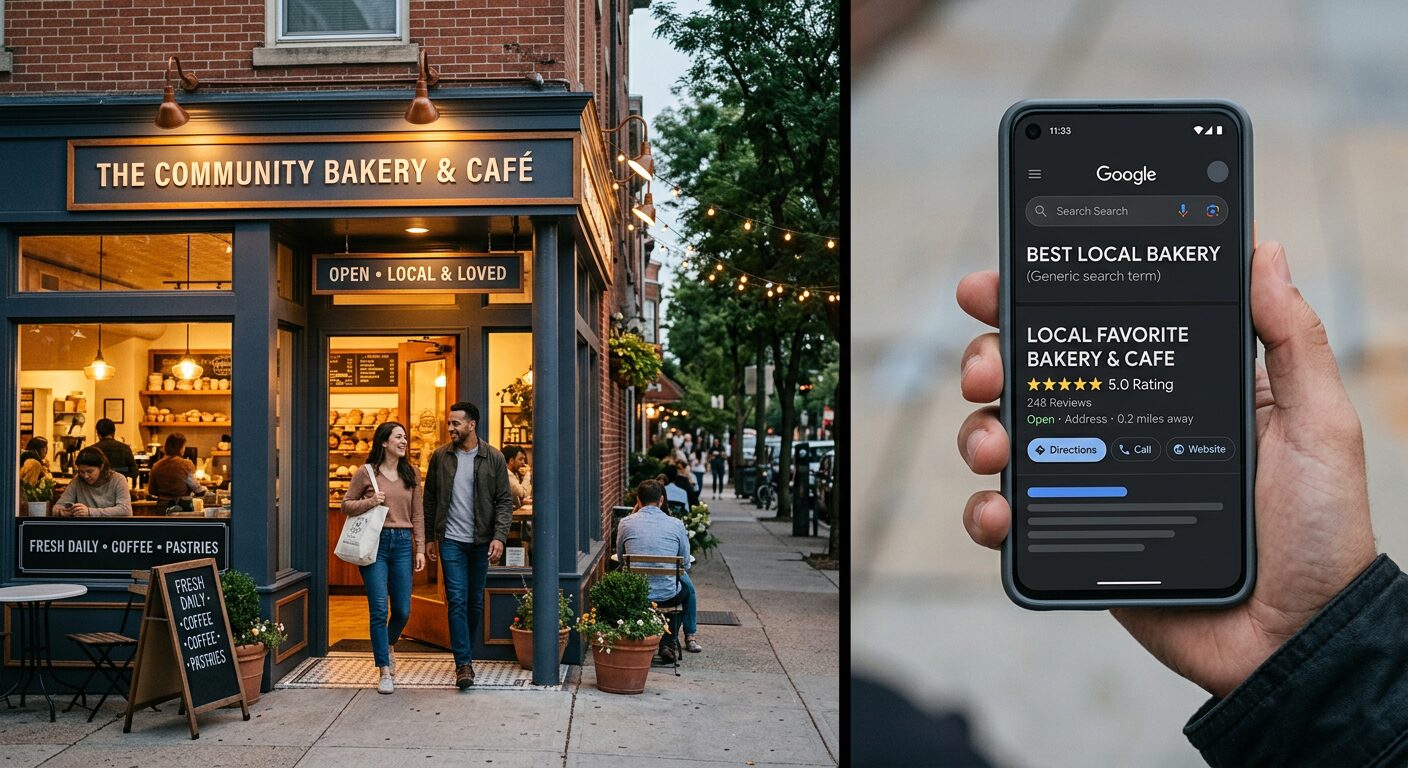
When someone nearby types “best pizza near me” or “plumber in [your city]” into Google, does your business show up?
If the answer is no — or you’re not sure — you’re leaving real money on the table every single day.
Local SEO (Search Engine Optimization) isn’t just a buzzword reserved for big corporations with massive marketing budgets. It’s one of the most powerful, cost-effective tools a small business owner can use to attract customers who are already looking for exactly what you offer — right in your neighborhood.
This guide breaks down the local SEO strategies that genuinely move the needle, explained clearly and practically so you can start taking action today.
Table of contents
What Is Local SEO — and Why Does It Matter?
Local SEO is the process of optimizing your online presence so that your business appears prominently when people in your area search for products or services like yours.
Unlike traditional SEO — which aims for global or national visibility — local SEO targets customers in a specific geographic area. Think of it as planting a flag in your community’s digital map and saying, “We’re here, we’re open, and we’re exactly what you need.”
Here’s why it matters more than ever:
A significant portion of all Google searches have local intent — people are looking for something nearby
Mobile searches for things “near me” have grown dramatically year over year
Most people who search locally visit or contact a business within 24 hours
For a small business, that’s an enormous opportunity — and most of your local competitors are probably not fully taking advantage of it.
1. Claim and Fully Optimize Your Google Business Profile
If there’s one single step that makes the biggest difference in local SEO, it’s this one.
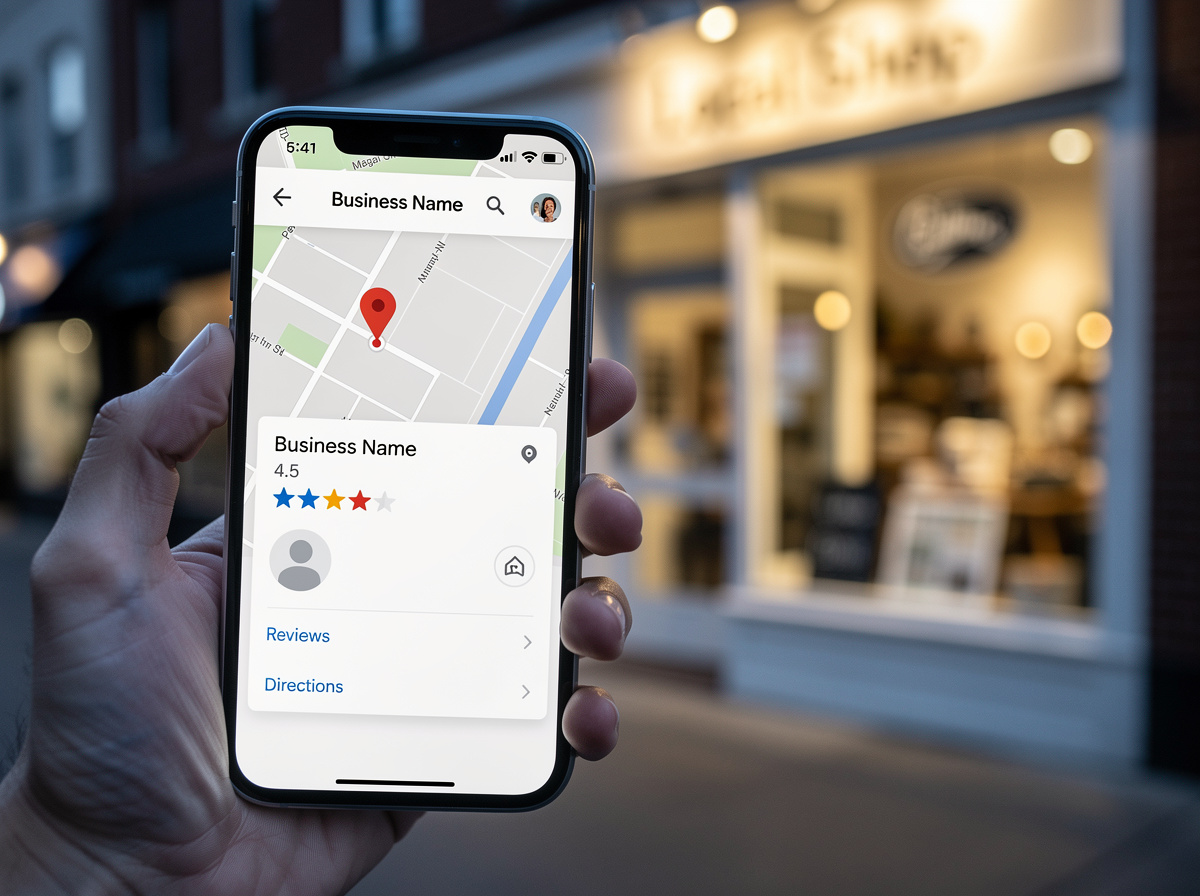
Google Business Profile (GBP) — formerly known as Google My Business — is the free tool that controls how your business appears in Google Search and on Google Maps. When someone searches for your business or a service you offer nearby, your GBP listing is often the very first thing they see.
Here’s how to optimize yours fully:
Claim your listing at business.google.com if you haven’t already
Complete every single field — business name, address, phone number, website, hours, category, and description
Choose the right business category — be as specific as possible
Add high-quality photos of your location, team, products, or services
Collect and respond to reviews — both positive and negative, professionally and promptly
Use the Q&A feature to answer common customer questions proactively
Post regular updates — promotions, news, events, or new products keep your listing active
Consistency is everything here. Make sure your business name, address, and phone number (NAP) are identical across your GBP listing and everywhere else online.
2. Get Your NAP Consistent Across the Web
NAP stands for Name, Address, Phone Number — and consistency in how this information appears across the internet is a foundational pillar of local SEO.
Search engines cross-reference your business information across dozens of directories, review sites, and data aggregators. If your business name is listed differently in different places — even small variations like “St.” vs. “Street” — it can confuse Google and hurt your local rankings.
Where to audit and update your NAP:
Your website (header, footer, and contact page)
Google Business Profile
Yelp
Facebook Business Page
Apple Maps
Bing Places
Industry-specific directories (like Houzz for home services, Zocdoc for medical, OpenTable for restaurants)
The Better Business Bureau
Local Chamber of Commerce listings
Tools like Moz Local, BrightLocal, or Yext can help you scan for inconsistencies and manage citations at scale — but even a manual audit is worth doing if you’re just getting started.
3. Build Local Citations
A local citation is any online mention of your business’s name, address, and phone number — even without a link back to your website.
Citations are one of the key signals Google uses to verify that your business is legitimate and located where you say it is. The more consistent and widespread your citations, the stronger your local authority becomes.
How to build local citations:
Submit your business to major data aggregators (Data Axle, Neustar Localeze, Foursquare)
Get listed in local and regional business directories
Join your local Chamber of Commerce — most offer a free directory listing
Reach out to local news sites, community blogs, and neighborhood platforms like Nextdoor
Sponsor local events that include directory or website listings
Quality matters more than quantity. A citation from a well-established local directory carries more weight than dozens of low-quality, spammy sites.
4. Optimize Your Website for Local Search
Your website needs to speak Google’s language — and your local customers’ language — at the same time.
Here are the most important on-page local SEO optimizations to make:
Include location-specific keywords naturally. Instead of just saying “we offer plumbing services,” write “we offer plumbing services in [City Name] and surrounding areas.” Weave your city, neighborhood, or region into your headlines, body copy, and page titles where it fits naturally.
Create a dedicated Contact/Location page. This page should include your full NAP, an embedded Google Map, your hours, and directions. This signals to Google exactly where you operate.
Add local business schema markup. This is structured data (a small piece of code) added to your website that tells search engines key information about your business — address, hours, phone number, business type. Many website platforms (like WordPress with Yoast or RankMath) make this easy to implement without technical knowledge.
Create location-specific landing pages if you serve multiple areas. Rather than one generic “Services” page, build a page for each city or neighborhood you serve. Each page should have unique, localized content — not just a template with the city name swapped in.
Make sure your site is mobile-friendly and loads fast. Most local searches happen on smartphones. A slow, clunky mobile experience will cost you both rankings and customers.
5. Earn and Manage Online Reviews Strategically
Reviews aren’t just social proof — they’re a direct local ranking factor.
Google looks at the quantity, quality, recency, and diversity of your reviews when deciding where to rank you in local results. Businesses with more positive, recent reviews consistently outperform competitors with fewer or older reviews.
How to build a review strategy:
Ask directly and promptly. After a purchase or service, follow up with an email or text asking for a review. Keep it simple and include a direct link to your Google Business Profile
Make it easy. Friction kills follow-through. The shorter the path to leaving a review, the more reviews you’ll collect
Respond to every review. Thanking happy customers shows engagement. Responding professionally to negative reviews shows maturity and trustworthiness
Never fake reviews. Google actively detects and removes suspicious reviews — and getting caught can tank your local rankings entirely
Diversify your review platforms. Google is most important, but Yelp, Facebook, and industry-specific platforms (TripAdvisor, Houzz, Healthgrades) all contribute to your overall local reputation
6. Create Locally Relevant Content
Content is still king — even in local SEO. But the key is creating content that’s relevant to your community, not just your industry.
Ideas for locally relevant content:
Blog posts about local events, news, or community stories related to your business
“Best of [City]” guides or resource roundups
Case studies featuring local customers (with permission)
Seasonal content tied to local weather, holidays, or events
Neighborhood guides if you’re a service area business
FAQ pages answering common questions from local customers
When people in your area search for topics related to your business, well-crafted local content gives you a chance to show up — even before they’re ready to buy. That builds familiarity and trust over time.
Publishing consistently is more important than publishing perfectly. A simple, helpful blog post once or twice a month can make a measurable difference in your local visibility.
7. Build Local Backlinks
A backlink is a link from another website pointing to yours — and it remains one of the strongest signals in Google’s ranking algorithm. For local SEO, the most valuable backlinks come from other websites in your community or industry.
How to earn local backlinks:
Partner with complementary local businesses and cross-link to each other where relevant
Sponsor local events, sports teams, or charities — sponsors are often listed with a link on the event website
Get featured in local media. Reach out to local newspapers, radio stations, and blogs with a genuine story angle
Join your local Chamber of Commerce — most include a link to your website in their member directory
Guest post on local blogs or community websites with helpful, non-promotional content
Participate in local award programs — “Best of [City]” awards often come with directory listings and backlinks
You don’t need hundreds of backlinks to win locally. A handful of high-quality, locally relevant links can dramatically boost your position in local search results.
8. Use Social Media to Reinforce Your Local Presence
Social media won’t directly boost your search rankings — but it plays a real supporting role in local SEO.
When your business is active and engaged on platforms like Facebook, Instagram, and even Nextdoor, it signals relevance and community presence. Local customers discover businesses through social feeds. They share reviews. They tag locations. They check in.
ass=”yoast-text-mark”>ass=”yoast-text-mark”>ass=”yoast-text-mark”>ass=”yoast-text-mark”>ass=”yoast-text-mark”>ass=”font-claude-response-body break-words whitespace-normal leading-[1.7]”>Local social media tips:
Tag your location in every post where it’s relevant
Use local hashtags specific to your city or neighborhood
Engage with other local businesses and community accounts — comments and shares extend your reach
Promote your Google reviews on social — a gentle reminder goes a long way
Share local events, community news, and behind-the-scenes content to build genuine connection
Think of social media as the human face of your local SEO strategy. It builds the kind of familiarity and trust that turns searchers into loyal customers.
Putting It All Together
Local SEO isn’t a one-time task. Like branding, it’s an ongoing practice — a steady drumbeat of consistent actions that compound over time.
The businesses that win locally aren’t necessarily the ones with the biggest budgets. They’re the ones that show up consistently: in search results, in directories, in conversations, and in their community.
Start with your Google Business Profile. Make sure your NAP is consistent. Ask for reviews. Add some local content to your website. Then build from there.
Local SEO rewards those who show up. So show up — and keep showing up.
Small steps, taken consistently, will position your business as the go-to choice in your area. And that’s where sustainable growth lives.
Frequently Asked Questions (FAQs)
What is local SEO?
Local SEO is the process of optimizing your online presence so your business appears in search results when people nearby are looking for products or services like yours. It focuses on geographic relevance — helping you show up on Google Maps, in the local “3-pack” results, and in location-based searches like “coffee shop near me” or “plumber in Atlanta.”
How long does local SEO take?
Most small businesses start seeing meaningful improvements within 3 to 6 months of consistent effort. Some quick wins — like fully optimizing your Google Business Profile or fixing NAP inconsistencies — can produce results faster. However, building lasting authority through citations, reviews, and backlinks takes time. Think of local SEO as a long-term investment, not a one-time fix.
How do I optimize my Google Business Profile?
Start by claiming your listing at business.google.com and completing every field — business name, address, phone number, hours, category, website, and description. Add high-quality photos, respond to all reviews, post regular updates, and use the Q&A feature to answer common customer questions. The more complete and active your profile, the better it performs in local search results.
What are local citations?
A local citation is any online mention of your business’s name, address, and phone number (NAP) — even without a link back to your website. Citations appear on directories like Yelp, Apple Maps, and the Better Business Bureau. They help Google verify that your business is legitimate and located where you say it is, which strengthens your local search rankings.
For more information about Outreach Brands’ forward-thinking digital marketing services, complete the online request form below.