You send the email. You wait. Nothing.
Sound familiar? You’re far from alone. The average office worker receives over 120 emails per day, and most cold outreach gets buried — or deleted — within seconds. The difference between a message that gets a reply and one that gets ignored isn’t luck. It’s psychology.
Understanding how your recipients think, feel, and decide is the real secret to cold email success. Master these seven psychological triggers, and you’ll transform your outreach from a numbers game into a precision strategy.
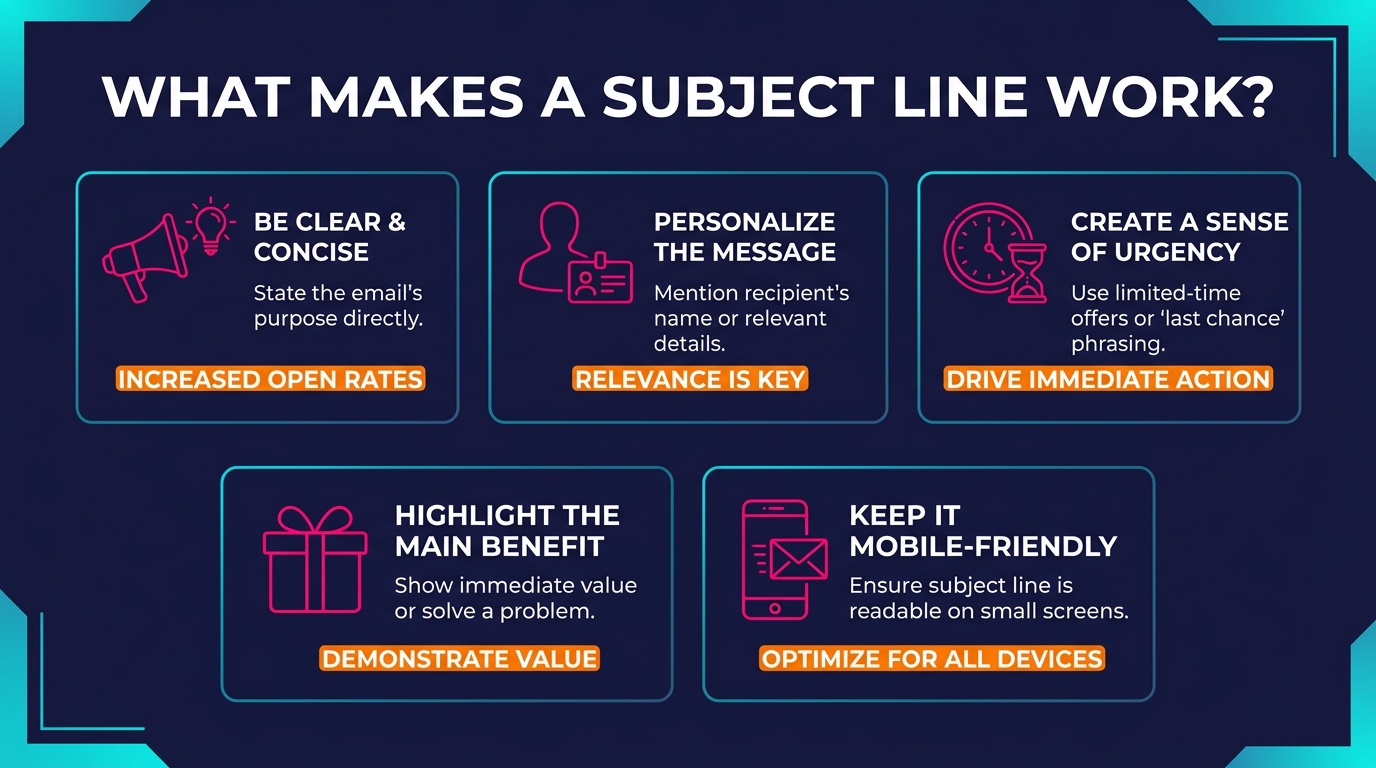
Your subject line is a single, high-stakes sentence. It’s your first — and sometimes only — impression.
The most effective subject lines don’t reveal everything. They tease. They create what psychologists call an “information gap” — a sense of incompleteness that the brain is compelled to close. Instead of “Our Services Can Help You Grow,” try “Is This the Missing Piece in Your Lead Strategy?” One is a statement. The other is a challenge.
According to research cited by Mailchimp’s email marketing benchmarks, subject lines between 6 and 10 words consistently generate the highest open rates across industries. Keep it short. Keep it intriguing. Avoid trigger words like “free” or “urgent” that spam filters — and skeptical humans — are trained to dismiss.
Pro tip: Test a question format against a bold declarative statement. Track which earns more opens with your specific audience.
Generic emails broadcast one message loudly: “I don’t know you, and I don’t care to.”
Personalization signals the opposite. When you mention a prospect’s name, reference their recent blog post, or acknowledge a specific challenge in their industry, you create immediate rapport. You show you’ve done the work. According to data highlighted in Campaign Monitor’s email personalization report, personalized emails can lift open rates by up to 26%.
But surface-level personalization isn’t enough. Going beyond “Hi [First Name]” to reference a real pain point — “I noticed you recently launched a new product line; here’s what most brands overlook during that stage” — elevates your message from interruption to invitation.
Pro tip: Build a simple research step into your outreach workflow. Five minutes of LinkedIn research per prospect can double your reply rate.
Urgency works. But fake urgency backfires.
Phrases like “ACT NOW — OFFER EXPIRES SOON” feel hollow and erode trust instantly. Real urgency, on the other hand, is tied to something genuine — a limited number of consultation slots, an upcoming webinar with a hard date, or a seasonal window that genuinely closes. This taps into FOMO (fear of missing out), one of the most well-documented behavioral drivers in consumer psychology.
The rule of thumb: pair urgency with value. Don’t just tell them the clock is ticking — explain exactly what they’ll gain by moving now, and what they risk losing by waiting.
Pro tip: “We only onboard 3 new clients per month to protect results quality” is specific, credible, and compelling. Vague countdowns are not.
Nobody wants to be the first to try something unknown. Social proof short-circuits that hesitation.
A single, well-placed proof point in a cold email — “We helped a regional eCommerce brand increase conversions by 34% in 90 days” — does more persuasive work than three paragraphs of feature descriptions. It signals competence, builds trust, and reassures the recipient that opening your email was a smart move.
Keep social proof tight and specific. Vague claims like “trusted by hundreds of businesses” are far less effective than concrete metrics tied to a recognizable scenario. Nielsen’s global trust in advertising report consistently shows that peer validation is among the highest-trust signals a brand can offer.
Pro tip: Rotate your proof points. A stat that resonates with a SaaS founder may not land with a retail CMO. Match the proof to the prospect.
Busy people skim. That’s not laziness — it’s survival in an inbox-saturated world.
If your email reads like a proposal, it will be treated like one: set aside, forgotten, deleted. Your cold email should be 100–150 words maximum. Short paragraphs. A bold phrase or two where it counts. And one — just one — clear call-to-action at the end.
Every sentence needs to earn its place. Cut anything that doesn’t move the reader toward your CTA. The goal isn’t to impress with volume. The goal is to trigger a single action.
Pro tip: Read your draft out loud. If you pause for breath mid-sentence, cut it in half.
Logic explains. Emotion decides.
Research consistently shows that purchasing and response decisions are driven first by emotion and rationalized by logic afterward. Cold emails that open with a relatable frustration — “Struggling to get your outreach noticed in a flooded inbox?” — immediately create resonance. You’re not pitching yet. You’re mirroring.
Once the emotional connection is made, you pivot: “Here’s the framework we used to help a business owner cut their follow-up time by half while tripling reply rates.” Now logic validates what emotion already leaned into.
Pro tip: Write the emotional hook first, then build the logical case around it. Not the other way around.
Even the best email fails if it arrives at the wrong moment.
Studies analyzed by HubSpot’s email marketing data point to Tuesday and Wednesday mornings between 8 and 10 AM (recipient’s local time) as the peak window for engagement. Weekends and late evenings see the sharpest drop-off in open rates, as recipients are mentally off the clock — or simply not checking work-related messages.
Use an email scheduling tool to automate timing precision across different time zones. This removes guesswork and ensures your carefully crafted message lands when it’s most likely to be seen.
Pro tip: Run A/B tests across different send windows with identical email content. Let your data tell you where your specific audience’s attention peaks.
Great cold emails aren’t accidents. They’re engineered. Here’s how all seven triggers layer together into a single, high-converting email:
- Subject Line → Spark curiosity. Create a gap. 6–10 words.
- Opening Line → Personalize immediately. Show you’ve done your homework.
- Body → Connect emotionally. Address their pain point. Offer a proof point.
- Urgency → Give them a genuine reason to act now, not later.
- CTA → One action. Clear. Specific. Low-friction.
- Send Time → Tuesday or Wednesday, 8–10 AM recipient time.
Cold email success was never about volume. It’s about precision. Every trigger covered in this article — curiosity, personalization, urgency, social proof, brevity, emotion, and timing — works because it aligns your message with the way real humans think and decide.
Apply these principles consistently. Test your subject lines. Refine your proof points. Track your timing. The inbox is crowded, but it’s not unbeatable — and with the right psychological framework, your outreach will stop disappearing into the void and start driving the conversations that grow your business.
For more information about Outreach Brands’ forward-thinking digital marketing services, complete the online request form below.